

Warning Signs for Driving Test in Saudi Arabia
Learning these signs is essential for passing the Saudi driving license test and ensuring road safety across the Kingdom.
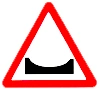
Dip
This warning sign alerts drivers to a dip in the road surface ahead. A dip can reduce vehicle control and visibility, so drivers should slow down, maintain steering control, and be prepared for suspension movement.
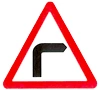
Sharp right turn
This sign warns drivers of a sharp right turn ahead. Drivers should reduce speed, stay within their lane, and prepare to steer carefully to avoid losing control while navigating the tight curve safely.
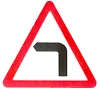
Slow down and prepare for a sharp left turn.
The sign indicates a sharp left turn ahead. Drivers should slow down in advance, keep proper lane position, and be ready to steer smoothly to safely negotiate the turn without sudden braking.
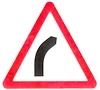
Turn right
This sign instructs drivers to turn right. It is placed where continuing straight is not allowed, so drivers must obey the direction to maintain traffic flow and avoid entering restricted or unsafe areas.
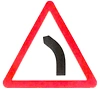
Left
This sign tells drivers they must turn left. It is a regulatory sign and must be followed to ensure proper traffic movement and prevent conflicts with other vehicles or road users.
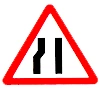
Left side
This warning sign indicates that the road narrows from the left side ahead. Drivers should reduce speed, stay alert, and adjust their lane position to avoid collisions as road width decreases.
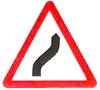
Winding road right
This sign warns of a winding road starting with a curve to the right. Drivers should slow down, remain attentive, and be prepared for multiple bends that may limit visibility and vehicle stability.
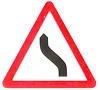
Left
This sign indicates a series of curves ahead, beginning with a left curve. Drivers should reduce speed, maintain control, and avoid sudden maneuvers as multiple bends can be challenging.
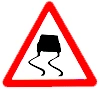
Slippery road (by sliding)
This sign warns of a slippery road, often due to water, oil, or loose material. Drivers should slow down, avoid harsh braking, and steer gently to prevent skidding or loss of control.
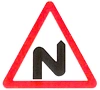
First it turns Right then left
This sign indicates dangerous bends ahead, first turning right and then left. Drivers must reduce speed, stay focused, and prepare for quick directional changes that can affect vehicle balance.
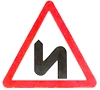
Left
This warning sign shows a series of dangerous bends beginning with a left turn. Drivers should slow down early and drive cautiously to safely handle the changing road direction.
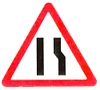
Right
This sign warns that the road narrows from the right side. Drivers should reduce speed, be alert to reduced space, and adjust their position to avoid sideswipes or collisions.
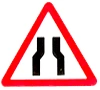
The road narrows from both sides
This sign indicates the road narrows from both sides ahead. Drivers should slow down, be cautious, and prepare for reduced road width that may require extra attention to oncoming traffic.
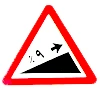
Steep rise
This sign warns of a steep rise ahead. Drivers should be cautious as visibility beyond the crest may be limited, requiring reduced speed and readiness for traffic or hazards beyond the rise.
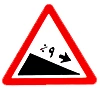
Alert drivers to reduce speed
This sign alerts drivers to a steep descent ahead. Drivers should reduce speed, use appropriate gears, and maintain control to avoid overheating brakes or losing control downhill.
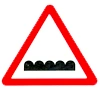
Series of bumps
This sign indicates a series of bumps on the road ahead. Drivers should slow down to protect vehicle suspension, maintain comfort, and keep control while driving over uneven surfaces.
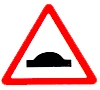
Bump
This sign warns of a bump ahead. Drivers should reduce speed to avoid discomfort, vehicle damage, or loss of control caused by sudden vertical road changes.
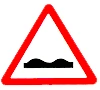
Bumpy road ahead
This sign warns of a bumpy road surface ahead. Drivers should slow down and maintain steady control to safely navigate uneven terrain and prevent vehicle instability.
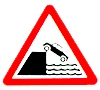
End of pier or river
This sign warns that the road may end at water, such as a river or pier. Drivers must slow down, stay alert, and be prepared to stop to avoid driving into water.
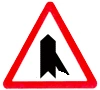
Side road on the right
This sign indicates a side road joins from the right. Drivers should reduce speed, watch for entering vehicles, and be prepared to adjust their position to avoid conflicts.
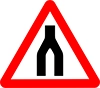
End of the double road
This sign warns that a dual road is ending. Drivers should prepare for reduced lanes, possible oncoming traffic, and adjust speed and positioning accordingly.
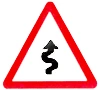
Slow down and stay alert.
This sign warns of several curves ahead. Drivers should slow down, remain alert, and drive smoothly to handle continuous changes in road direction safely.
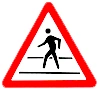
Slow down and yield to pedestrians.
This sign alerts drivers to a pedestrian crossing ahead. Drivers must slow down, watch carefully, and be ready to stop to allow pedestrians to cross safely.
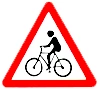
Bicycle crossing
This sign warns of a bicycle crossing area. Drivers should reduce speed, stay alert, and give cyclists enough space to ensure safety for all road users.
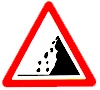
Be cautious and watch for falling rocks.
This sign warns of possible falling rocks. Drivers should proceed cautiously, avoid stopping unnecessarily, and stay alert for debris that may obstruct the road.
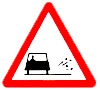
Scattered gravel
This sign indicates loose gravel on the road. Drivers should reduce speed, avoid sudden steering or braking, and maintain control to prevent skidding.
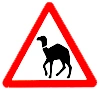
Camel crossing
This sign warns of camels crossing the road. Drivers should slow down and stay alert, as animals may enter the roadway unexpectedly, especially in rural areas.
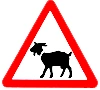
Animals crossing
This sign alerts drivers to animals crossing ahead. Drivers should reduce speed and be prepared to stop, as animals can move unpredictably and cause serious accidents.
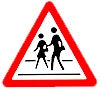
Slow down and prepare to stop for children.
This sign warns of children crossing, often near schools. Drivers should slow down, remain alert, and be prepared to stop to protect children’s safety.
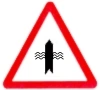
Crossing water
This sign indicates water crossing the road ahead. Drivers should reduce speed and proceed carefully, as water can affect traction and hide road damage.
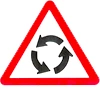
Traffic rotary (roundabout)
This sign warns of a traffic rotary ahead. Drivers should slow down, prepare to yield, and follow roundabout rules to ensure smooth and safe traffic flow.
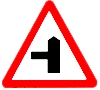
Intersection
This sign indicates an intersection ahead. Drivers should reduce speed, watch for crossing traffic, and be prepared to yield or stop if necessary.
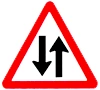
A two-way street
This sign warns that the road carries traffic in both directions. Drivers should stay in their lane, avoid overtaking carelessly, and remain alert to oncoming vehicles.
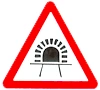
A tunnel
This sign warns of a tunnel ahead. Drivers should turn on headlights, reduce speed, and be prepared for changes in lighting and road conditions inside the tunnel.
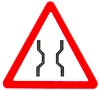
A narrow bridge
This sign alerts drivers to a narrow bridge ahead. Drivers should slow down, stay centered in their lane, and watch for oncoming vehicles.
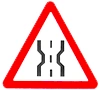
A narrow bridge
This sign warns of sand dunes on the road. Drivers should reduce speed and maintain control, as sand can reduce tire grip and affect steering.
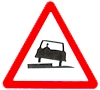
Prepare for a low shoulder
This sign warns of a low shoulder beside the road. Drivers should avoid drifting off the roadway, as returning suddenly can cause loss of control.
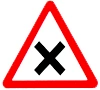
A dangerous junction
This sign warns of a dangerous junction ahead. Drivers should slow down, stay alert, and be prepared for unexpected vehicle movements.
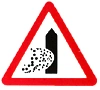
Watch out for sand dunes
This sign warns drivers to watch for sand dunes. Sand can reduce traction, so drivers should slow down and steer gently to maintain control.
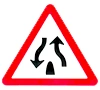
Prepare for the end of the double road
This sign warns that the double road is ending. Drivers should prepare for lane reduction and possible oncoming traffic, adjusting speed accordingly.
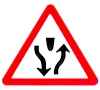
Beginning of the double road
This sign indicates the start of a dual road. Drivers should be aware of lane changes and increased traffic flow, and adjust driving accordingly.

50 meters
This sign indicates a distance of 50 meters to a hazard or feature ahead. Drivers should be prepared to react soon by slowing down or adjusting position.

100-meter distance indicators for trains
This sign shows a 100-meter distance indicator for a railway crossing. Drivers should slow down and prepare to stop if a train is approaching.

150 meters
This sign indicates the railway crossing is 150 meters ahead. Drivers should reduce speed and stay alert for warning signals or approaching trains.

Give preference to other vehicles.
This sign instructs drivers to give preference to other vehicles. Drivers must slow down and yield to traffic with priority to avoid collisions.
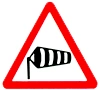
Winds crossing
This sign warns of crosswinds. Drivers should hold the steering wheel firmly, reduce speed, and be cautious, especially when driving high-sided vehicles.
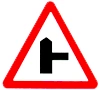
Intersection
This sign warns of an intersection ahead. Drivers should slow down, check for traffic from all directions, and be prepared to yield or stop.
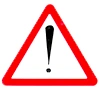
Be careful
This sign advises drivers to be careful. It indicates potential hazards ahead, requiring increased attention, reduced speed, and cautious driving behavior.
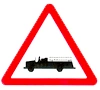
Fire station
This sign warns of a fire station nearby. Drivers should be alert for emergency vehicles entering or exiting the road and be ready to give way.
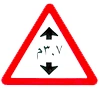
Maximum height
This sign indicates a maximum height restriction ahead. Drivers of tall vehicles must ensure their vehicle height does not exceed the limit to avoid collisions.
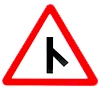
The road merges from the right
This sign warns drivers that another road or lane will merge into the main road from the right. Drivers should reduce speed, stay alert, and be ready to adjust position to allow merging traffic safely.
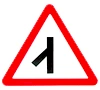
The road merges from the left.
This sign indicates that traffic from a side road on the left will join the main road ahead. Drivers should be cautious, anticipate merging vehicles, and maintain a safe following distance.
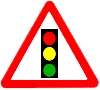
Beacons (Traffic Lights)
This sign alerts drivers that traffic signals are ahead. Drivers should be prepared to slow down, observe signal changes, and stop if required to avoid sudden braking or collisions.
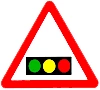
Beacons (Traffic Lights)
This sign warns of upcoming traffic lights. It reminds drivers to stay attentive, reduce speed, and be prepared to stop, especially if visibility is limited or traffic is heavy.
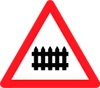
The intersection of a railway gate
This sign warns drivers of a railway crossing with gates ahead. Drivers should slow down, obey signals, and be prepared to stop when barriers close to avoid collisions with trains.
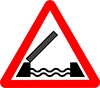
Drawbridge
This sign indicates a drawbridge ahead that may open for boats. Drivers should reduce speed, follow signals, and be ready to stop when the bridge is raised.
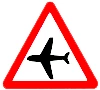
Check for low air traffic conditions.
This sign advises drivers to slow down because a drawbridge is ahead. Be prepared for traffic stops, follow warning lights, and maintain a safe distance from other vehicles.
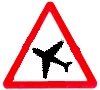
Airstrip (Runway)
This sign indicates the presence of an airstrip or runway nearby. Drivers should be cautious, watch for low-flying aircraft, and follow any additional traffic instructions in the area.
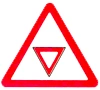
Give way ahead.
This sign instructs drivers to give way to other vehicles ahead. Drivers must slow down, check traffic on the priority road, and proceed only when it is safe.
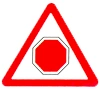
Stop sign in front of you
This sign warns that a stop sign is ahead. Drivers should reduce speed early and be prepared to come to a complete stop at the upcoming intersection.
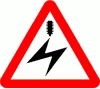
Electrical cables
This sign warns of electrical cables overhead. Tall vehicles should take special care, maintain safe clearance, and avoid stopping or unloading beneath the cables.
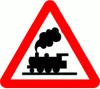
Railroad crossing without a gate
This sign indicates an unguarded railway crossing ahead. Drivers must slow down, look both ways, listen for trains, and cross only when it is completely safe.
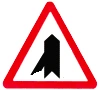
A branch road from the left
This sign warns that a side road will join from the left. Drivers should stay alert, reduce speed, and be prepared for vehicles entering the main road.
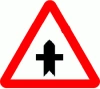
The intersection of a main road with a sub-road
This sign indicates an intersection where a minor road meets a main road. Drivers should be cautious, expect crossing traffic, and adjust speed to avoid conflicts.
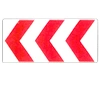
Prepare for a sharp deviation to the left.
This sign warns of a sharp deviation to the left ahead. Drivers should slow down, maintain lane control, and follow the curve carefully to avoid losing control.
Saudi Driving Test Handbook
Online practice builds test skills. Offline study supports quick review. Saudi driving test handbook covers traffic signs, theory topics, road rules in clear structure.
Handbook supports test preparation. Handbook reinforces learning from practice tests. Learners review key concepts, study at own pace, access guide on separate page.
Start Practicing for Your Saudi Driving Test
Practice tests support Saudi driving test success. These computer-based tests match the Saudi driving license exam format used at Dallah Driving School and official test centers.
Warning Signs Test – 1
This test checks warning sign recognition. Learners identify hazards such as curves, intersections, road narrowing, pedestrian areas, and surface changes on Saudi roads.
Warning Signs Test – 2
This test covers advanced warning signs. Learners recognize pedestrian crossings, railway signs, slippery roads, steep slopes, and visibility-related hazard alerts.
Regulatory Signs Test – 1
This test focuses on regulatory signs. Learners practice speed limits, stop signs, no-entry zones, prohibition rules, and mandatory instructions under Saudi traffic law.
Regulatory Signs Test – 2
This test checks rule compliance. Learners identify parking rules, priority control, direction mandates, restricted movements, and enforcement-based traffic signs.
Guidance Signals Test – 1
This test builds navigation skills. Learners interpret direction signs, route guidance, city names, highway exits, and destination indicators used in Saudi Arabia.
Guidance Signals Test – 2
This test improves route understanding. Learners read service signs, exit numbers, facility markers, distance boards, and highway information panels.
Temporary Work Area Signs Test
This test covers construction zone signs. Learners identify lane closures, detours, worker warnings, temporary speed limits, and road maintenance indicators.
Traffic Light & Road Lines Test
This test checks signal and marking knowledge. Learners practice traffic light phases, lane markings, stop lines, arrows, and intersection control rules.
Saudi Driving Theory Test – 1
This test covers basic driving theory. Learners practice right-of-way rules, driver responsibility, road behavior, and safe driving principles.
Saudi Driving Theory Test – 2
This test focuses on hazard awareness. Learners evaluate reactions to traffic flow, weather changes, emergency situations, and unexpected road events.
Saudi Driving Theory Test – 3
This test checks decision making. Learners assess overtaking rules, following distance, pedestrian safety, intersections, and shared road situations.
Saudi Driving Theory Test – 4
This test reviews Saudi traffic laws. Learners practice penalties, violation points, legal duties, and consequences defined by traffic regulations.
Random Questions Challenge Test – 1
This mock test mixes all categories. Learners measure readiness for the Saudi driving license computer test across signs, rules, and theory topics.
Random Questions Challenge Test – 2
This challenge test improves recall speed. Learners answer mixed questions covering warning signs, regulatory signs, guidance signs, and theory rules.
Random Questions Challenge Test – 3
This final challenge confirms exam readiness. Learners validate full knowledge before attempting the official Saudi driving license computer exam.
All-in-One Challenge Test
This test combines all questions in one exam. Learners review complete Saudi driving test content for final preparation and confidence.